
People Skills in the 21st Century are more important now than ever. Sure, technology keeps moving at breakneck speed—AI, automation, global networks everywhere—but at the end of the day, nothing replaces real human connection. You can have all the technical know-how in the world, but people skills are what actually help you work with others, lead, influence, and build relationships that matter.
Students today face a future where being able to communicate, adapt, and read the room ranks right up there with grades and test scores. Employers want more than a diploma or a list of coding languages. They’re looking for people who work well in teams, stay calm under pressure, and express their ideas clearly and confidently.
At House of Soft Skills (HOSS), we see it all the time—when kids learn how to relate to others early on, they grow up more sure of themselves and better prepared for everything life throws at them, not just exams.
What Are People Skills?
So, what do we actually mean by people skills? Basically, it’s all those social, emotional, and communication abilities that let you connect with others. It’s how you get your point across, understand where someone else is coming from, settle arguments, and keep relationships going strong. Technical skills are about ticking boxes and getting tasks done, but people skills shape how you act in groups, handle challenges, and connect in both work and life.
If you’ve got strong people skills, you’re able to:
— Communicate clearly and confidently
— Really listen to others
— Work well with people from all kinds of backgrounds
— Manage your emotions
— Build trust
And honestly, in today’s world, you need these skills just to get by—whether you’re in class, at work, or leading a team. That’s exactly why People Skills in the 21st Century are becoming essential for long-term success.
Interpersonal Skills and People Skills in the 21st Century
You’ll often hear “interpersonal skills” tossed around too. They’re a big part of people skills, but focus more on how you communicate and build relationships. Think verbal and non-verbal communication, active listening, emotional awareness, empathy, patience, and flexibility.
For example, a student who listens to classmates and responds thoughtfully shows strong interpersonal skills. Same goes for a manager who’s clear with expectations and backs up their team during tough times.
When we talk about People Skills in the 21st Century, these interpersonal abilities are at the heart of it all—they’re what make teamwork and collaboration work.
Soft Skills vs People Skills: What’s the Difference?
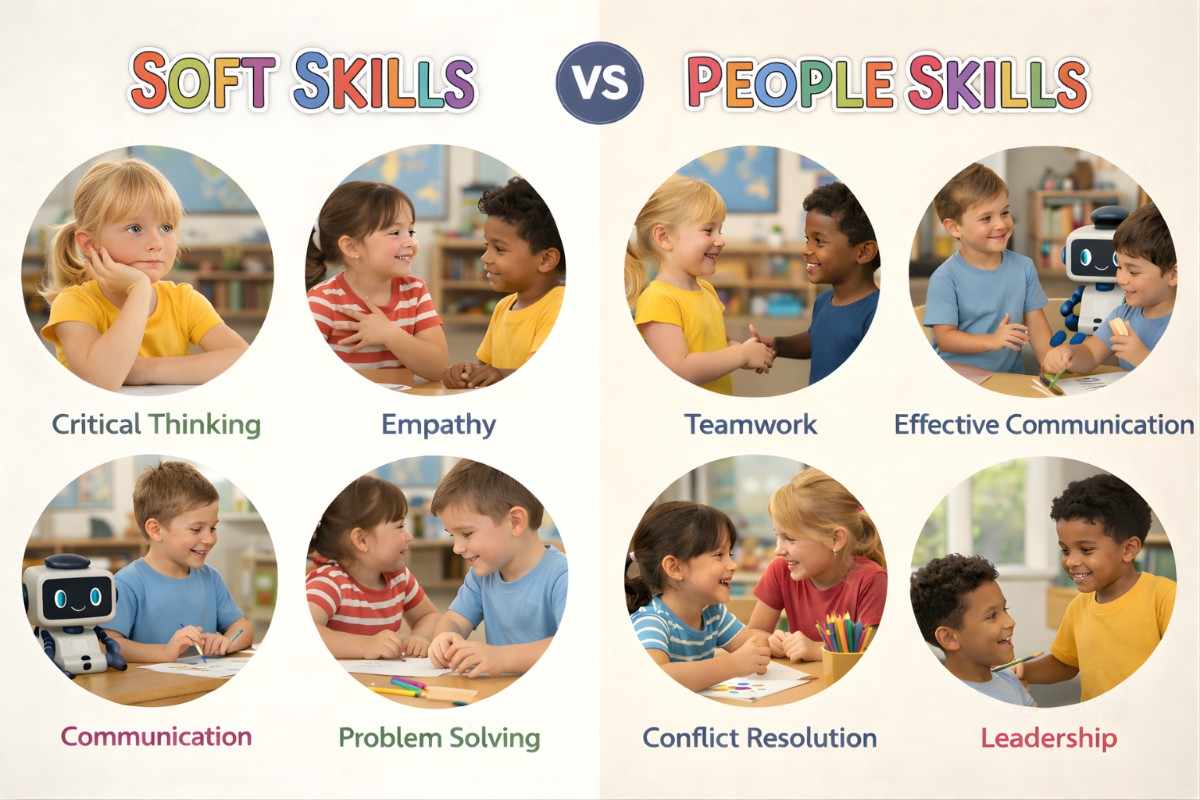
There’s also a lot of confusion out there between “soft skills” and “people skills.” They’re related, but not the same. Soft skills cover a wide range: time management, adaptability, leadership, problem-solving, critical thinking—the list goes on. People skills are really a subset of soft skills, zeroing in on social interactions and communication.
Put simply:
— All people skills are soft skills.
— But not all soft skills are people skills.
Take time management, for instance. It’s a soft skill, but it’s not really about dealing with people. Communication and teamwork, though? Both are people skills and soft skills.
Read more about: What are Soft Skills?
It’s good to know the difference, especially since employers are putting more and more weight on social smarts—not just technical chops—in today’s People Skills in the 21st Century driven workplace.
Why People Skills in the 21st Century Are Critical for Modern Workplaces
Here’s the thing: over the last twenty years, the world has changed fast. Teams work across time zones. Remote jobs are everywhere. Most of our conversations happen online now. But even with all this tech, real human connection is still what moves things forward.
That’s why people skills matter so much right now. Technology can crunch numbers and automate work, but it can’t show empathy, earn trust, inspire a team, settle disputes, or really understand what people are feeling. And those are the things that make the biggest difference.
Let’s face it—workplaces today are anything but predictable. People team up with colleagues from all sorts of backgrounds, deal with changes that come out of nowhere, and tackle problems that don’t have easy answers. That’s where People Skills in the 21st Century come in. They turn what could be a mess of misunderstandings into real progress.
People Skills vs Hard Skills: What Really Drives Success?
Now, you’ll hear a lot about “hard skills” like coding, accounting, or graphic design. These are the nuts and bolts—the things you can measure, test, and put on a resume. Of course, you need them to do your job. But knowing your stuff isn’t enough to get ahead.
Picture this: two people with the same technical chops. One of them just gets how to talk to others, works well with the team, and rolls with the punches. The other? Not so much. Always at odds with the group, never quite on the same page. Guess who’s more likely to move up? It’s almost always the one with better people skills.
These days, you can’t just pick between hard skills and soft skills. You need both. Sure, technical skills open doors, but it’s the people skills—especially People Skills in the 21st Century—that keep those doors open and lead you to bigger opportunities.
The Role of People Skills in Career Growth and Leadership
Why do people skills matter so much for your career? Simple. Getting promoted isn’t just about being good at your job. It’s about working well with others, making connections, and showing you can lead. Employers say it all the time: the best employees communicate clearly and play well with the team.
People skills help you get your point across, build trust, sort out disagreements before they explode, run projects, and handle change without losing your cool. If you want to move up, you need more than technical know-how—you need to show you can bring people together and represent your company with confidence.
When it comes to leadership, it’s not about bossing people around. The best leaders inspire, listen, and make everyone feel like their ideas matter. They keep the team motivated, spark new ideas, and create a positive vibe at work. That takes emotional intelligence, honest communication, and the guts to make tough calls under pressure. Leaders who don’t connect with people? They end up out of touch and ineffective.
Why Students Need People Skills in the 21st Century
And honestly, people skills aren’t just for adults. Kids and students need them, too. Getting good grades is nice, but it’s not enough anymore. Students who know how to listen, speak up, and handle setbacks do better in class, make real friends, and work well in teams.
For kids, learning to talk about their feelings and get along with others sets them up for life. That’s why developing People Skills in the 21st Century from an early age gives children a powerful advantage.
At House of Soft Skills (HOSS), we start early. Our programs help kids build confidence, communicate, lead, and understand their emotions from a young age.
Types of People Skills That Shape Success
So, what do people skills look like day-to-day? It’s things like listening without cutting people off, using body language that shows you’re engaged, keeping your cool during arguments, pitching in when your team needs help, and showing real empathy when someone’s having a rough time. These little things add up—in school, at work, and in life.
There are a few main types of people skills:
1. Communication skills—getting your ideas across, whether you’re talking, writing, or just using body language.
2. Emotional intelligence—knowing how you feel, reading the room, and handling emotions (yours and others’).
3. Teamwork—working together and aiming for the same goal.
4. Conflict resolution—sorting out disagreements without burning bridges.
5. Leadership—guiding, inspiring, and influencing others in a positive way.
Each one matters, and together, they shape who you are—on the job and outside of it.
The Future of Work and the Growing Demand for People Skills in the 21st Century
The good news? People skills aren’t set in stone. You can get better at them if you put in the effort. Listen more, try public speaking, throw yourself into group projects, think about how you react to things, and ask others for honest feedback. Training, mentors, and structured programs can speed things up, but it really comes down to practice and a willingness to grow.
The way we work is changing fast. Sure, machines can take over the boring, repetitive stuff, but when it comes to creativity, empathy, and leadership—those are still very much our territory.
Right now, companies want more people who know how to read a room, think on their feet, adapt to whatever comes their way, work well with others, and actually get their point across. These aren’t just buzzwords anymore. They’re what set people apart.
Workplaces are getting more unpredictable and connected than ever, so People Skills in the 21st Century matter even more. The ability to connect and communicate isn’t just nice to have—it’s what shapes who gets hired, who leads, and who actually makes a difference.
Even as technology marches on, nothing beats real human connection. That’s where people skills shine. They help you speak up, work as a team, and lead with heart.
At House of Soft Skills (HOSS), we’re all about building these strengths. We want people to walk away as confident communicators, thoughtful leaders, and tuned-in team players—ready for whatever the world throws at them, both in school and at work.
Because in the end, success isn’t just about what you know. It’s about who you are, how you connect, and the way you inspire the people around you.
Frequently Asked Questions (FAQs)
1. What are People Skills in the 21st Century?
A1. People Skills in the 21st Century are the abilities that help individuals communicate, work in teams, manage emotions, and build strong relationships in today’s modern and digital world.
2. Why are people's skills important today?
A2. People skills are important because workplaces now require teamwork, clear communication, and emotional intelligence. Technical skills alone are not enough for long-term success.
3. What is the difference between soft skills and people skills?
A3. Soft skills include many non-technical abilities like time management and problem-solving. People skills are a part of soft skills and mainly focus on communication and interaction with others.
4. What are examples of people skills?
A4. Examples include active listening, teamwork, empathy, leadership, conflict resolution, confidence, and clear communication.
5. How can students improve their people skills?
A5. Students can improve their people skills by participating in group activities, practicing public speaking, listening carefully to others, and learning how to manage their emotions.