
Emotional Intelligence Skills are becoming one of the most important abilities children need in today’s world. While academic learning helps children gain knowledge, emotional intelligence helps them understand themselves and others. In a time where children face school pressure, social competition, screen distractions, and changing environments, managing emotions has become just as important as scoring good marks.
Many parents focus only on academic success. However, research and real-life experience show that children who understand their emotions, control their reactions, and communicate effectively are more confident and successful in the long run. Emotional intelligence shapes how children think, behave, and connect with others. It supports their mental well-being, relationships, and future careers.
Let’s understand this deeply.
What Are Emotional Intelligence Skills?
Emotional Intelligence Skills are the abilities that help children recognize, understand, manage, and express emotions in healthy ways. These skills also allow them to understand the emotions of others and respond with empathy and respect.
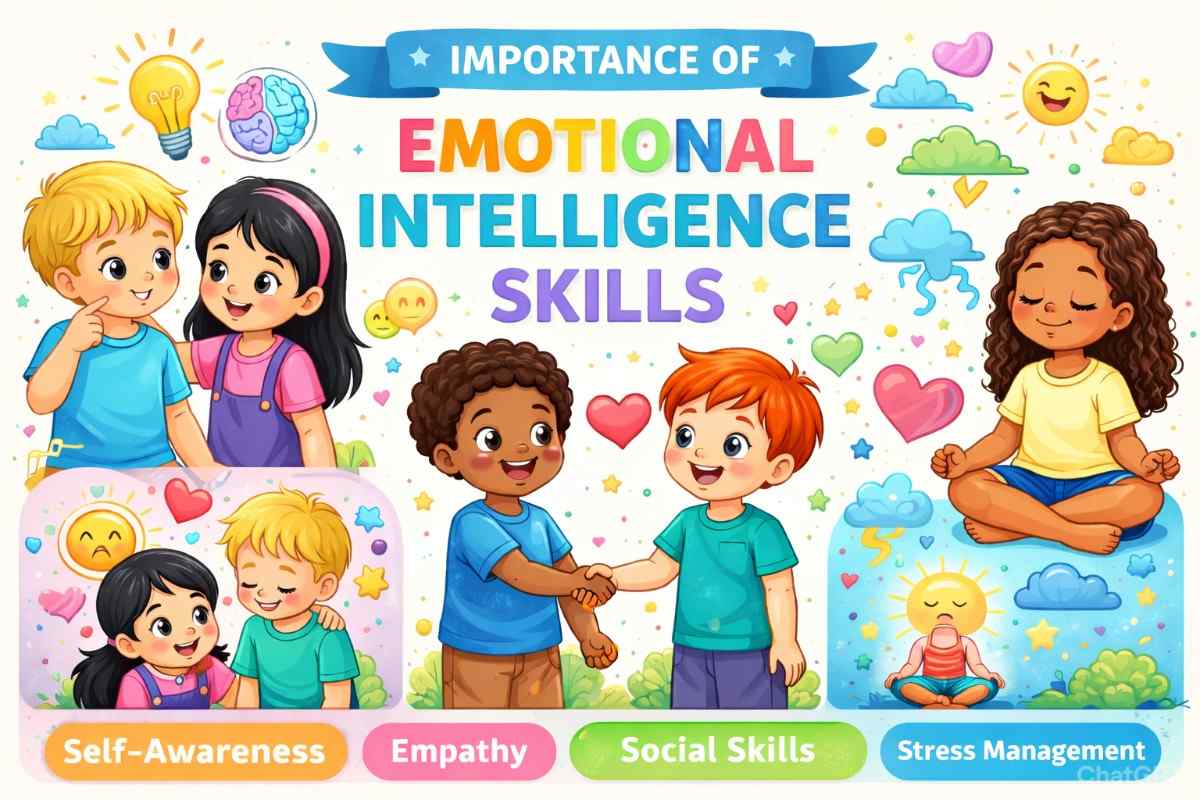
In simple words, emotional intelligence means:
-
Knowing what you are feeling
-
Understanding why you feel that way
-
Managing strong emotions calmly
-
Understanding how others feel
-
Responding appropriately in social situations
Psychologists often explain emotional intelligence through five main components.
1. Self-Awareness
Self-awareness means understanding your own emotions. When a child can say, “I feel nervous before exams,” or “I am upset because my friend ignored me,” it shows emotional awareness.
This skill is important because children who understand their emotions can handle them better. Without awareness, emotions control behavior. With awareness, children learn to control emotions.
2. Self-Regulation
Self-regulation is the ability to manage emotions, especially strong ones like anger, frustration, or excitement.
For example:
-
A child who loses a game but chooses not to shout is practicing self-regulation.
-
A child who feels angry but speaks calmly is showing emotional control.
This skill reduces behavioral problems and improves discipline.
3. Empathy
Empathy means understanding and caring about how others feel. When a child notices that a classmate is sad and tries to comfort them, it shows empathy.
Empathy builds kindness, compassion, and strong friendships. It also reduces bullying and conflicts.
4. Social Skills
Social skills include communication, teamwork, listening, cooperation, and problem-solving. These help children interact confidently with peers, teachers, and adults.
Children with strong social skills:
-
Make friends easily
-
Work well in group projects
-
Express their ideas clearly
-
Handle disagreements respectfully
5. Motivation
Motivation in emotional intelligence means staying positive and focused, even during challenges.
For example:
-
A child who keeps trying after failing once shows emotional motivation.
-
A child who sets goals and works toward them shows determination.
Together, these Emotional Intelligence Skills shape a child’s personality and overall growth.
Why Emotional Intelligence Skills Matter for Kids Today
Children today grow up in a world very different from previous generations. They face academic competition, social comparison, online exposure, and constant stimulation. Because of this, emotional balance has become extremely important.
Here’s why Emotional Intelligence Skills matter more than ever:
1. Helps in Academic Performance
When children control stress and anxiety, they focus better in class. Emotional stability improves concentration, memory, and participation.
Students who manage exam fear calmly perform better than those who panic.
2. Builds Strong Friendships
Friendships require understanding, patience, and communication. Emotionally intelligent children resolve misunderstandings faster and maintain healthier relationships.
They listen, understand others’ feelings, and avoid unnecessary arguments.
3. Reduces Behavioral Problems
Children who cannot control emotions may react aggressively, cry frequently, or withdraw socially.
Emotional intelligence teaches children how to pause, think, and respond instead of reacting instantly.
4. Improves Confidence
When children understand their feelings and express themselves clearly, they feel more confident. They are not afraid to speak up in class or share their ideas.
Confidence grows when children feel emotionally secure.
5. Supports Better Decision-Making
Children often make decisions based on emotions. Emotional intelligence teaches them to think before acting.
For example:
-
Saying no to peer pressure
-
Managing online behavior responsibly
-
Choosing friends wisely
These are lifelong benefits.
Importance of Emotional Intelligence Skills
The importance of Emotional Intelligence Skills goes beyond childhood. These abilities affect every area of life — education, relationships, and career.
Children with strong emotional intelligence are more likely to:
-
Handle criticism positively
-
Adapt to new environments
-
Work well in teams
-
Show leadership qualities
-
Solve problems calmly
In fact, many modern workplaces value emotional intelligence as much as technical knowledge. Employers look for people who can collaborate, manage stress, and communicate effectively.
Read more about: Phonics vs Sight-Words Lessons
This means emotional intelligence is not just about feelings — it is about real-world success.
Long-Term Impact of Emotional Intelligence
The long-term impact of Emotional Intelligence Skills is powerful and lasting. When children develop these skills early, they carry them into adulthood.
1. Career Success
Emotionally intelligent adults handle workplace pressure better. They communicate clearly, resolve conflicts peacefully, and lead teams effectively.
Many successful leaders are known for their emotional intelligence.
2. Mental Health and Well-Being
Understanding emotions reduces stress, anxiety, and frustration. It improves emotional stability and resilience.
Children who learn to manage emotions early are less likely to struggle with emotional imbalance later.
3. Strong Personal Relationships
Healthy relationships depend on empathy, communication, and emotional understanding.
Emotionally intelligent individuals build stronger friendships, marriages, and professional networks.
4. Adaptability in a Changing World
The world keeps changing. New technologies, new challenges, and new environments require adaptability.
Emotionally intelligent individuals adjust more easily because they remain calm and positive during change.
Emotional Intelligence Activities for Kids
The good news is that Emotional Intelligence Skills can be developed with regular practice.
Here are detailed activities that parents and teachers can use:
1. Emotion Identification Exercises
Ask children daily:
-
How are you feeling today?
-
Why do you feel that way?
This improves self-awareness.
2. Role-Playing Scenarios
Create situations like:
-
What would you do if your friend ignored you?
-
How would you respond if someone teased you?
This builds emotional control and problem-solving.
3. Gratitude Journaling
Encourage children to write three things they are thankful for each day. This increases positivity and emotional balance.
4. Group Discussions
Allow children to share opinions and listen to others. This improves empathy and communication skills.
5. Story Reflection
After reading a story, ask:
-
How do you think the character felt?
-
What could they have done differently?
This builds emotional understanding.
How House of Soft Skills (HOSS) Supports Emotional Growth
At House of Soft Skills (HOSS), we believe emotional development is essential for overall success. Our programs focus on communication, confidence building, leadership skills, and emotional awareness.
We help children:
-
Express emotions confidently
-
Develop empathy
-
Improve public speaking
-
Strengthen teamwork
-
Build leadership qualities
Our approach is practical, interactive, and focused on long-term growth — not just short-term improvement.
In today’s fast-moving world, Emotional Intelligence Skills are not optional — they are essential. They help children understand themselves, build meaningful relationships, manage stress, and grow into confident individuals.
Academic knowledge may open opportunities, but emotional intelligence helps children use those opportunities wisely.
When we invest in emotional development today, we build stronger, happier, and more successful adults tomorrow.
Frequently Asked Questions (FAQs)
1. What are Emotional Intelligence Skills?
Emotional Intelligence Skills are the ability to understand, manage, and express emotions in a healthy way. They also help children understand others’ feelings and build strong relationships.
2. Why are Emotional Intelligence Skills important for kids?
Emotional Intelligence Skills help kids control anger, reduce stress, communicate better, and solve problems calmly. They improve confidence and social behavior.
3. At what age should kids start learning Emotional Intelligence Skills?
Children can start learning Emotional Intelligence Skills as early as 3–4 years old. Simple activities like talking about feelings can help.
4. How can parents improve Emotional Intelligence Skills at home?
Parents can improve Emotional Intelligence Skills by:
-
Talking openly about emotions
-
Teaching empathy
-
Encouraging problem-solving
-
Being a good role model
5. What are some simple Emotional Intelligence activities for kids?
Some easy activities include:
-
Emotion chart games
-
Role-playing situations
-
Gratitude journaling
-
Deep breathing exercises