
Understanding Phonics is one of the most important steps in helping children become confident readers. When children start learning to read, they first need to understand how letters and sounds work together to form words. Phonics provides this foundation by teaching children the relationship between letters and the sounds they represent.
In early childhood education, phonics plays a crucial role in building strong reading skills. Instead of memorizing words, children learn how to decode them by recognizing sounds. This approach helps them read new words independently and improves their overall literacy development.
Early reading skills do not develop overnight. They grow through consistent practice, sound recognition, and exposure to language. When children understand how letters connect to sounds, they begin to read more smoothly and with greater confidence.
At House of Soft Skills (HOSS), early language learning is seen as a key part of child development. When children develop strong phonics knowledge, they not only improve reading abilities but also strengthen communication and learning skills that support long-term academic success.
What Is Phonics and How Does It Work
To truly understand Phonics, it is important to first know what phonics actually means.
Phonics is a method of teaching reading by connecting letters with the sounds they represent. For example, the letter B makes the /b/ sound, and when combined with other sounds, it forms words like bat, ball, or book. By learning these sound patterns, children can decode words rather than memorizing them.
Phonics works through a simple process:
First, children learn individual letter sounds.
Then they begin blending sounds together to form words.
Finally, they practice recognizing these sounds in books and sentences.
For example, when a child sees the word cat, phonics helps them break it into sounds:
C – /k/
A – /a/
T – /t/
When blended together, these sounds form the word cat.
This skill allows children to read unfamiliar words confidently. Instead of guessing words, they rely on sound recognition and decoding skills.
Understanding this process is essential because phonics creates the bridge between spoken language and written text.
Why Phonics Is Important for Reading Skills in Children
The importance of phonics in early education cannot be overstated. Phonics helps children develop essential reading abilities that support learning across all subjects.
One of the main reasons phonics is important is that it teaches children how language works. They begin to recognize sound patterns, letter combinations, and word structures.
Some of the key ways phonics supports reading development include:
Improved word recognition: Children learn to identify and decode words more easily when they understand sound patterns.
Better pronunciation: Phonics teaches children how to pronounce words correctly by breaking them into sounds.
Stronger reading fluency: When children decode words quickly, they read more smoothly and confidently.
Vocabulary growth: As children learn phonics rules, they become able to read and understand new words.
Without phonics, many children struggle with reading because they rely only on memorization. Phonics provides a logical system that makes reading easier and more natural.
Benefits of Phonics Learning for Children
The benefits of phonics go beyond simply learning to read. Phonics builds a strong language foundation that supports academic and personal growth.
1. Builds Strong Reading Foundations
Phonics helps children understand how written language works. This understanding makes reading easier and more enjoyable.
2. Improves Spelling Skills
When children know letter-sound relationships, they can spell words more accurately. Phonics allows them to break words into sounds and write them correctly.
3. Boosts Reading Confidence
Children who understand phonics feel more confident when reading. They are less afraid of unfamiliar words because they know how to decode them.
4. Supports Independent Learning
Phonics encourages children to figure out words on their own instead of relying on others.
5. Strengthens Language Development
By learning phonics, children improve pronunciation, listening skills, and communication abilities.
Because of these advantages, phonics is widely recognized as one of the most effective ways to develop early literacy.
Key Phonics Skills Children Need to Learn
Several core skills are part of Understanding Phonics and learning to read effectively.
Letter Sound Awareness: Children must first learn that each letter represents a specific sound.
Blending Sounds: Blending is the ability to combine individual sounds to form a word.
Example:
/d/ + /o/ + /g/ = dog
Segmenting Words: Segmenting means breaking a word into individual sounds. This skill helps children with spelling.
Phonemic Awareness: Phonemic awareness involves recognizing and manipulating sounds in spoken words. It helps children understand how sounds form language.
These phonics skills work together to strengthen reading ability and literacy development.
Phonics Activities That Improve Reading Skills
Learning phonics becomes more effective when children practice through fun activities. Interactive learning keeps children engaged and helps them remember sound patterns.
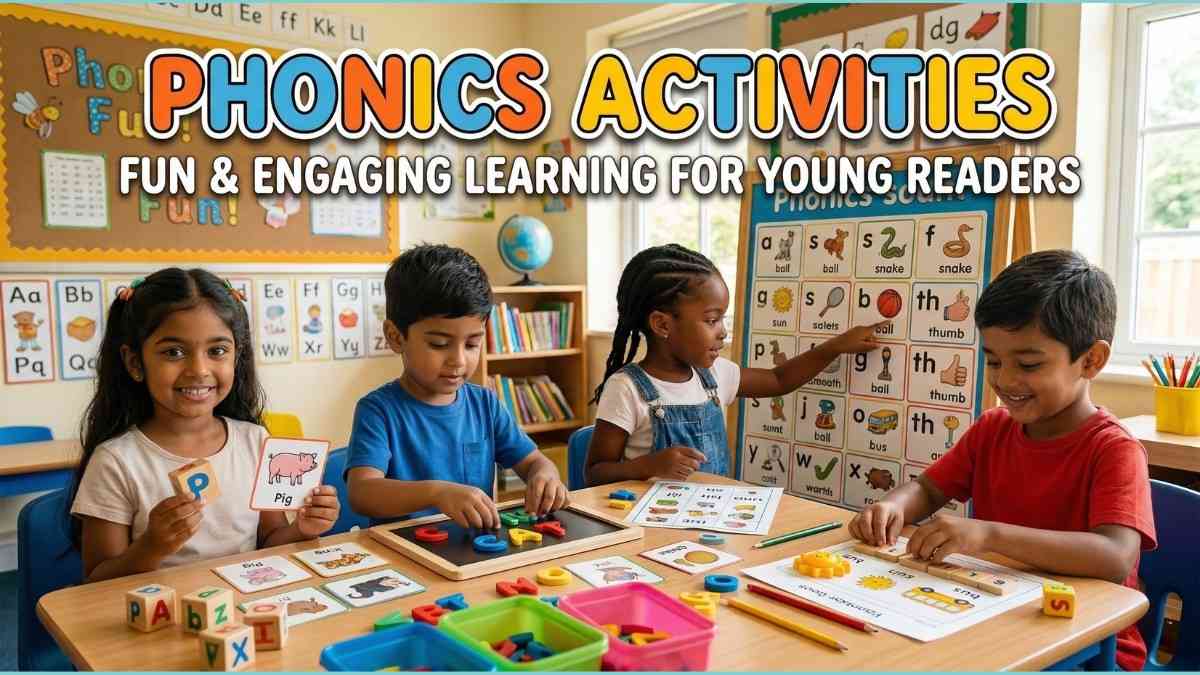
Some helpful phonics activities include:
1. Sound Matching Games: Children match letters with their corresponding sounds.
2. Word Building Activities: Using letter blocks to form words helps children understand sound combinations.
3. Reading Aloud: Listening to stories improves pronunciation and sound recognition.
4. Rhyming Games: Rhyming helps children identify similar sound patterns in words.
These activities make phonics learning enjoyable and help children develop reading habits naturally.
How Parents Can Teach Phonics at Home
Parents play a major role in developing reading skills. Even simple daily habits can strengthen phonics learning.
Some effective strategies include:
Encouraging children to read aloud regularly
Practicing letter sounds through simple games
Using storybooks to identify sound patterns
Introducing new words during conversations
Creating a positive reading environment at home
Consistency is key. When children practice phonics regularly, their reading skills improve quickly.
The Role of Structured Learning Programs in Phonics Development
While home learning is important, structured programs provide additional support and guidance.
Professional learning environments offer:
-
Expert teaching methods
-
Interactive phonics exercises
-
Peer learning opportunities
-
Structured reading practice
At House of Soft Skills (HOSS), language development programs are designed to help children build strong communication and reading abilities. By combining phonics learning with confidence-building activities, children develop both literacy skills and effective communication.
Must read about: What are Soft Skills?
This balanced approach helps children grow into confident readers and expressive communicators.
Understanding Phonics is a critical step in developing strong reading skills in children. By learning how letters and sounds connect, children gain the ability to decode words, read fluently, and understand language more effectively.
The importance of phonics lies in its ability to build a solid literacy foundation. From improving pronunciation to strengthening vocabulary, phonics supports multiple aspects of language development.
When children learn phonics early, they develop confidence in reading and communication. Parents, educators, and structured learning programs all play an important role in supporting this journey.
At House of Soft Skills, helping children build strong communication and language skills is a core focus. With the right guidance and consistent practice, children can develop reading abilities that support lifelong learning and success.
Frequently Asked Questions (FAQs)
1. What is phonics and why is it important for children?
A. Phonics is a method that teaches children how letters and sounds work together. It helps kids read words correctly and improves their pronunciation, spelling, and overall reading confidence.
2. At what age should children start learning phonics?
A. Children can start learning phonics as early as 3 to 4 years old. Early phonics learning helps them recognize sounds and letters before they begin formal reading in school.
3. How does phonics improve reading skills in children?
A. Phonics teaches children to connect letters with their sounds. This helps them decode new words, read more fluently, and understand texts more easily.
4. What are some simple phonics activities for kids?
A. Some effective phonics activities include sound games, rhyming words, flashcards, reading simple storybooks, and letter-sound matching exercises. These activities make learning fun and engaging.
5. Can phonics help children who struggle with reading?
A. Yes, phonics is very helpful for children who find reading difficult. It builds a strong foundation by teaching them how to break words into sounds and read them step by step.